Humans have the edge over AI in "one crucial domain", Princeton neuroscientists say
Machines still lag behind their fleshy creators when it comes to an ability often described as the most important skill of the 21st century.
For those of us fed up with a never-ending torrent of AI slop now filling the dead internet, it seems clear that humans still have some sort of edge over machines in the arena of creativity.
Now Princeton researchers have confirmed that biological brains "still hold the upper hand in at least one crucial domain".
A team from the Princeton Neuroscience Institute has said that AI remains unable to learn on the fly, adapting to new information and unfamiliar challenges.
The flexibility that allows humans to learn unfamiliar computer software and adapt to novel situations such as mastering new games or cooking unfamiliar recipes simply cannot be matched by machines - yet.
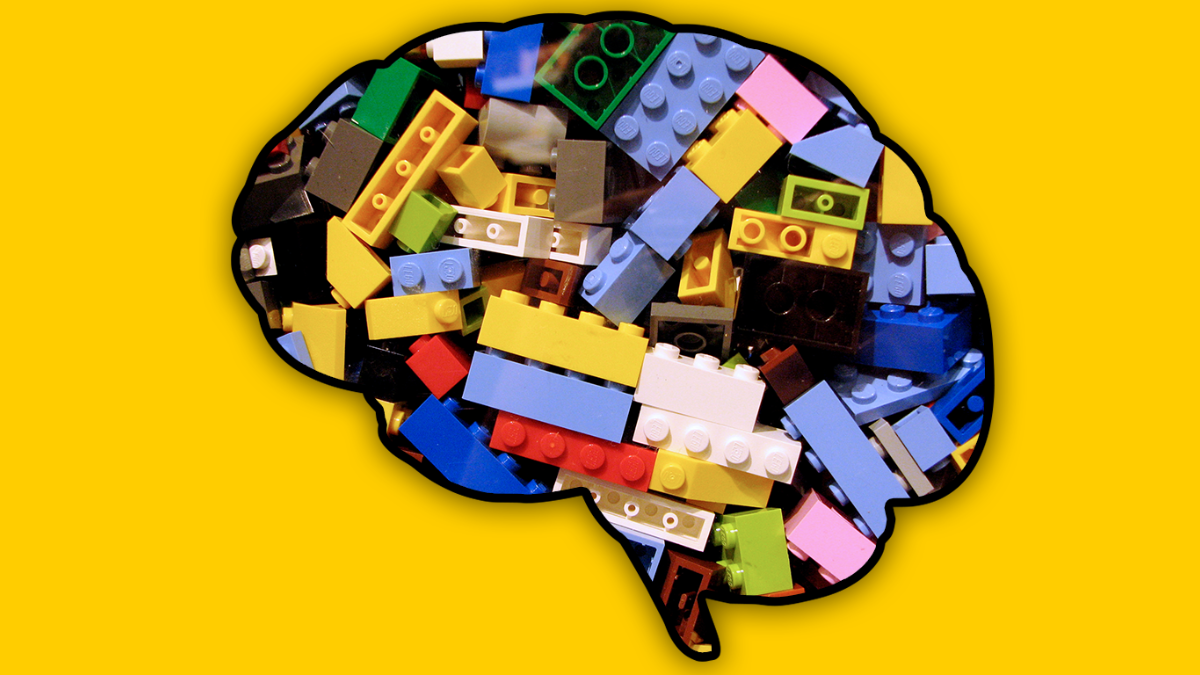
Our flexibility - a skill often described as the most important of the 21st century - is enabled by Lego-like cognitive "blocks" that are reused across many different tasks, the neuroscientists wrote in a new paper published in the journal Nature.
Combining and recombining these blocks lets the brain rapidly assemble new behaviours, allowing us to adapt to new tasks and situations.
"State-of-the-art AI models can reach human, or even super-human, performance on individual tasks. But they struggle to learn and perform many different tasks,” said Tim Buschman, Ph.D., senior author of the study and associate director of the Princeton Neuroscience Institute.
"We found that the brain is flexible because it can reuse components of cognition in many different tasks. By snapping together these ‘cognitive Legos,’ the brain is able to build new tasks."
The hidden talents of blockhead humans
To understand our flexibility, imagine a task like fixing a motorcycle. For someone who has already repaired a car or even a bicycle, this job will be easier than starting from scratch, because they can repurpose skills they've already developed.
This ability to reuse skills and apply them to new tasks is called compositionality.
"If you already know how to bake bread, you can use this ability to bake a cake without relearning how to bake from scratch," said Sina Tafazoli, Ph.D., a postdoctoral researcher in the Buschman lab at Princeton and lead author of the new study.
"You repurpose existing skills — using an oven, measuring ingredients, kneading dough — and combine them with new ones, like whipping batter and making frosting, to create something entirely different."
READ MORE: "We still need humans!": Data centre truckers gear up for a blue-collar AI boom
To expose the mechanisms behind human resourcefulness and cognitive flexibility, Tafazoli trained two male rhesus macaques to perform three related tasks and monitored their brain activity. You can see one of the tests in the video above.
The apes were asked to judge whether a colourful blob on a screen in front of them looked more like a bunny or the letter “T” (categorizing the shape) or if it was more red or green (categorizing colour).
Monkeys then indicated a response by looking in one of four different directions.
Although every task was unique, they also shared core elements with the other games.
For instance, both the colour and shape tasks required the macaques to look in the same direction.
This experiment was designed as a way of testing whether the brain reused neural patterns — its "cognitive building blocks" — across tasks involving shared components.
Learning to learn
Tafazoli and Buschman found that the prefrontal cortex — a region at the front of the brain involved in higher cognition — contained several "common, reusable patterns of activity" across neurons that fired when working toward a common goal.
“I think about a cognitive block like a function in a computer program,” Buschman said. “One set of neurons might discriminate color, and its output can be mapped onto another function that drives an action. That organization allows the brain to perform a task by sequentially performing each component of that task."
These brain blocks may help to explain why humans learn new tasks so quickly, suggesting our mind "minimises redundant learning" - a trick currently beyond the capabilities of modern AI.
"A major issue with machine learning is catastrophic interference," Tafazoli added.
"When a machine or a neural network learns something new, they forget and overwrite previous memories. If an artificial neural network knows how to bake a cake but then learns to bake cookies, it will forget how to bake a cake."
READ MORE: Are humans doing enough to support the great AI workplace takeover?
It's hoped that giving AI the same compositionality as human brains may allow machines to learn new skills without forgetting old ones, presumably hammering the final nail into the usefulness of our increasingly useless species.
The research may also help to treat conditions such as schizophrenia, obsessive-compulsive disorder, and brain injuries that impair a person’s ability to apply known skills to new contexts - a problem that is potentially caused by disruptions to the brain's ability to recombine its cognitive building blocks.
"Imagine being able to help people regain the ability to shift strategies, learn new routines, or adapt to change,” Tafazoli said. "In the long run, understanding how the brain reuses and recombines knowledge could help us design therapies that restore that process."