Leep Ring review: A sleep-monitoring smart ring to rule them all?
"This is not a wearable trying to convince you it can transform your life through algorithmic enlightenment..."

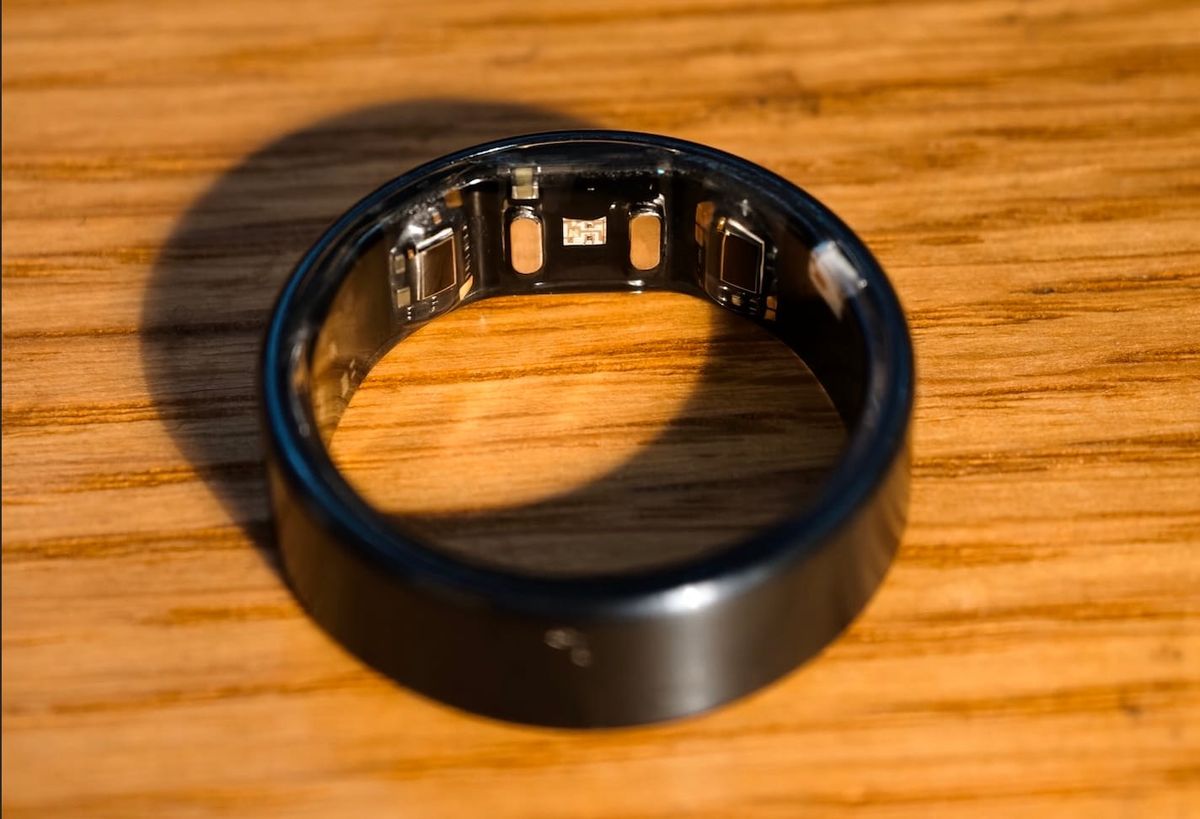
The wearable industry has spent the last decade slowly convincing people that existing is a competitive sport.
What began with counting steps and nudging people to stand up occasionally has evolved into a relentless stream of scores, readiness ratings, recovery metrics and increasingly abstract measurements of what your organs may or may not be up to.
Somewhere along the line, fitness tracking drifted into becoming a kind of low-level performance review for your own body.
Sleep score: disappointing
Recovery: concerning
Stress: unsurprising
Battery: ironically low
The smart ring market in particular has leaned heavily into this. Tiny titanium bands packed with sensors now promise to track everything short of your tax return, often while charging north of £300 and quietly introducing a subscription fee for the privilege of seeing your own data.
Which is what makes the Leep Ring interesting.
A quieter kind of smart ring
Not because it radically changes what a smart ring does. In practical terms, it tracks much the same things as everybody else: sleep, activity, stress, heart rate, blood oxygen and all the usual wearable telemetry. The interesting part is that it doesn’t seem particularly interested in turning those things into a full-time hobby.
After a few weeks wearing it, and after spending some time speaking with founder Simon Neave, it became pretty clear that the Leep Ring is less about chasing perfect metrics and more about nudging people toward slightly better habits over time. That sounds suspiciously sensible for consumer tech, which immediately makes it stand out.
Neave has been around consumer electronics long enough to have watched several technology hype cycles come and go. During our chat he talked about working across mobile tech, wearables and distribution, including time spent working with Ultrahuman before eventually deciding to build something himself. What struck me wasn’t startup-founder evangelism - there was refreshingly little of that - but how grounded the whole thing felt.
He kept coming back to the same idea – the philosophy shapes almost everything about the Leep Ring – that most people do not spend hours poring over wearable data. In reality, they glance at it for a minute or two, maybe check how they slept, maybe look at their steps, and then get on with their day.
Sleep is the main event
Sleep is the clear priority. In Neave’s words, “100% of us sleep”, and “something like 70% of people don’t get enough”. The exact number is open to debate, but the broader point is hard to argue with. Sleep sits underneath basically every other health conversation, yet most wearable companies treat it as just one tile in a dashboard stuffed with dozens of competing metrics.
The ring tracks everything you’d expect - sleep duration, stages, heart rate, HRV, breathing and blood oxygen levels - then rolls those into a sleep score alongside longer-term trends. It also tracks activity through steps, active minutes and heart rate zones, while stress monitoring attempts to build a broader picture of how your body is responding over time.
This is where the distinction between snapshot and trend becomes important. My sister-in-law once made a very fair point about sleep trackers: “I don’t need a device to tell me that I don’t sleep as well after a few drinks.” She’s right. If you go to bed late, drink too much, wake up three times and feel like you’ve been lightly beaten with a cricket bat, a sleep score confirming “bad” is not adding much to the sum of human knowledge.
The value comes from what happens over time. It is not whether Tuesday night was bad, because you probably know that already. It is whether your average sleep is improving, whether certain habits consistently push it in the wrong direction, or whether the thing you assumed was ruining your sleep is less important than something else you had not noticed. Good
Importantly, though, the app rarely feels like it’s screaming for attention. The information is there if you want it, but it doesn’t constantly push itself into your face. There’s a notable absence of the kind of hyperactive “biohacker” energy that some wearables have adopted, where every fluctuation becomes a miniature crisis requiring immediate optimisation.
READ MORE: Return of the vibrating mouse: Logitech MX Master 4 review
The anti-anxiety wearable
Neave was fairly candid about that side of the industry. At one point during our conversation he brought up increasingly elaborate wellness metrics appearing in competing products and laughed at the idea of turning proxy measurements into grand declarations about your long-term brain health.
“It’s just giving people another metric to get anxious about,” he said.
That line ended up sticking with me because it neatly explains why the Leep Ring feels different in use. It still tracks plenty of information, but it’s much less interested in encouraging obsession.
There’s even a small feature buried in the app that quietly reinforces this idea. Each morning, alongside your sleep data, the app asks how rested you actually feel. It sounds simple enough, but it changes the relationship between the user and the data. Rather than the ring declaring an objective truth about your night, it acknowledges that your own experience still matters.
“It’s how you feel, don’t go by your score,” Neave said, referencing advice from sleep specialists. This sounds obvious, yet somehow also feels mildly radical which says quite a lot about where wearables have drifted.
The hardware mostly gets out of the way
Physically, the ring itself is solid. The titanium build feels durable without becoming bulky, and after a day or two I largely forgot I was wearing it, which is exactly what you want from something designed to track sleep. Battery life is quoted at around eight days. In reality I found myself charging it every six days or so, usually before it fully drained, which still feels perfectly respectable.
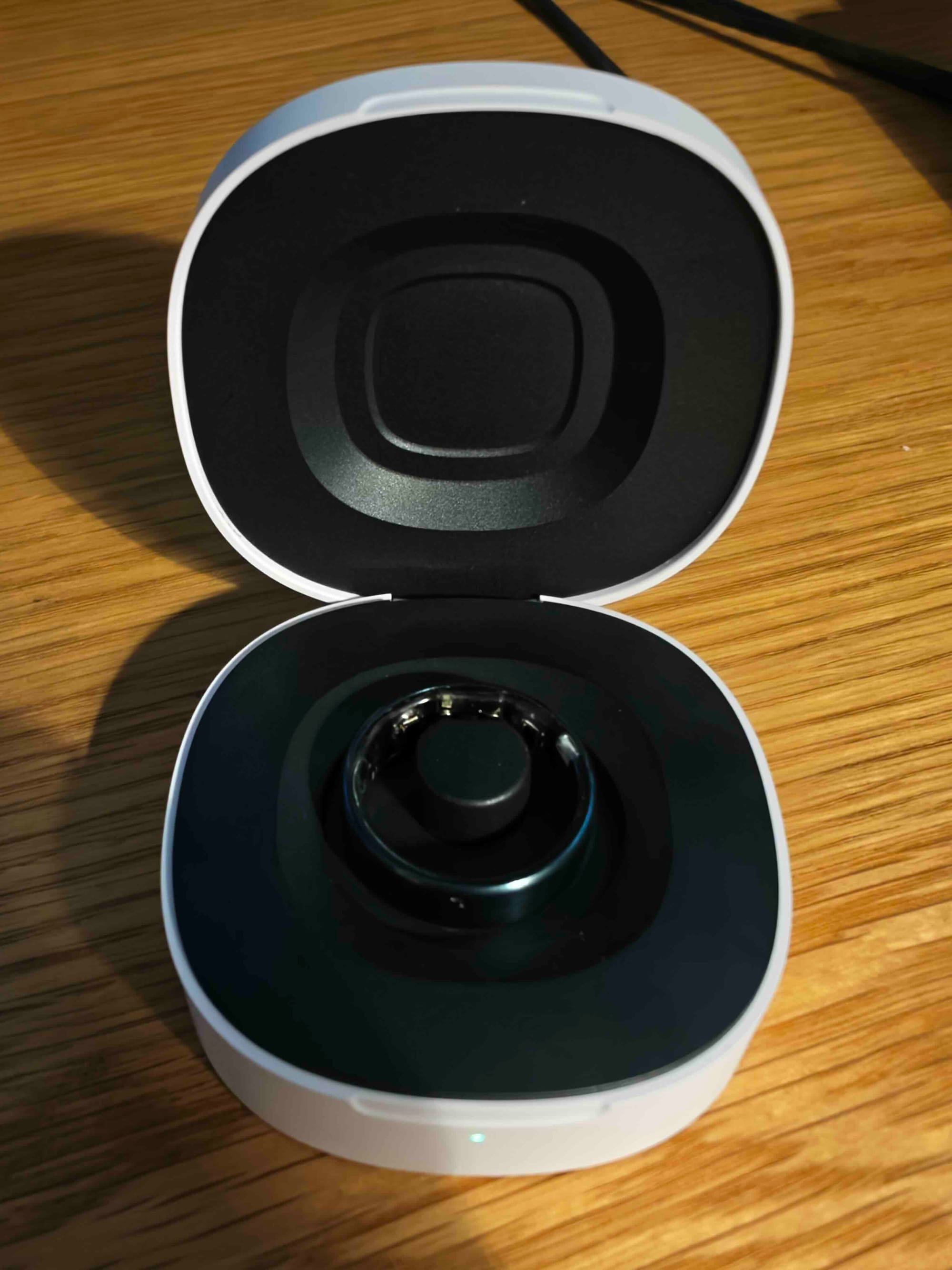
The charging case deserves a quick mention too because it’s one of those practical details that ends up mattering more than you expect. The case has its own internal battery, so you can recharge the ring multiple times before needing to plug the whole thing in. It turns the charging process into something you barely think about, which feels entirely in keeping with the rest of the product philosophy.
The app itself is perhaps the weakest part of the overall experience. Not catastrophically bad, but occasionally cluttered and slightly awkward to navigate until you get used to it. There are moments where it feels like a startup app still evolving in public rather than a perfectly polished ecosystem.
The stress tracking also still feels early. Neave openly admitted this during our discussion and spent a good chunk of time talking about where he wants to take it next, including potentially combining voice analysis with heart rate and HRV data to build more contextual stress monitoring.
Some of those ideas are genuinely interesting. Some may never make it beyond the whiteboard behind his desk. Frankly, that’s probably healthy. Wearables are already drowning in features people rarely use, and one of the more refreshing things about Leep is that it doesn’t appear desperate to bolt on every possible gimmick just to keep pace with competitors.
READ MORE: reMarkable Paper Pro Move review: Great for handwriting, terrible for multitasking
A surprisingly sensible approach to data
That restraint also extends to the company’s approach to data. All processing happens on-device and within the app itself. There’s optional cloud backup if you want it, but the core product doesn’t rely on constantly shipping your health data off to remote servers somewhere. Interestingly, Neave admitted this initially came from practical considerations around infrastructure costs rather than privacy idealism, but it has accidentally positioned the company rather well at a time when people are increasingly wary about where their health information ends up.
Verdict
This is not a wearable trying to convince you it can transform your life through algorithmic enlightenment. It’s a reasonably priced smart ring that tracks the important stuff competently, avoids overcomplicating things and quietly encourages you to pay attention to longer-term habits rather than minute-by-minute fluctuations.
At £169, with no subscription attached, it also undercuts much of the market without feeling cheap. That alone gives it a fairly compelling place in the increasingly crowded smart ring space.
The Leep Ring will not satisfy hardcore fitness obsessives who want endless real-time metrics and ultra-granular analysis. Nor will it appeal to people who equate value entirely with feature lists.
For everyone else - the people who mostly just want to sleep a bit better, understand their habits a bit more clearly and not be emotionally judged by a tiny titanium circle every morning - the Leep Ring makes a surprisingly strong case for itself.