Mayor Sadiq Khan looks to unleash crime-fighting robot police dog in London
Quadruped robots that sparked a "fierce backlash" in New York City could be coming to the capital and other UK cities.

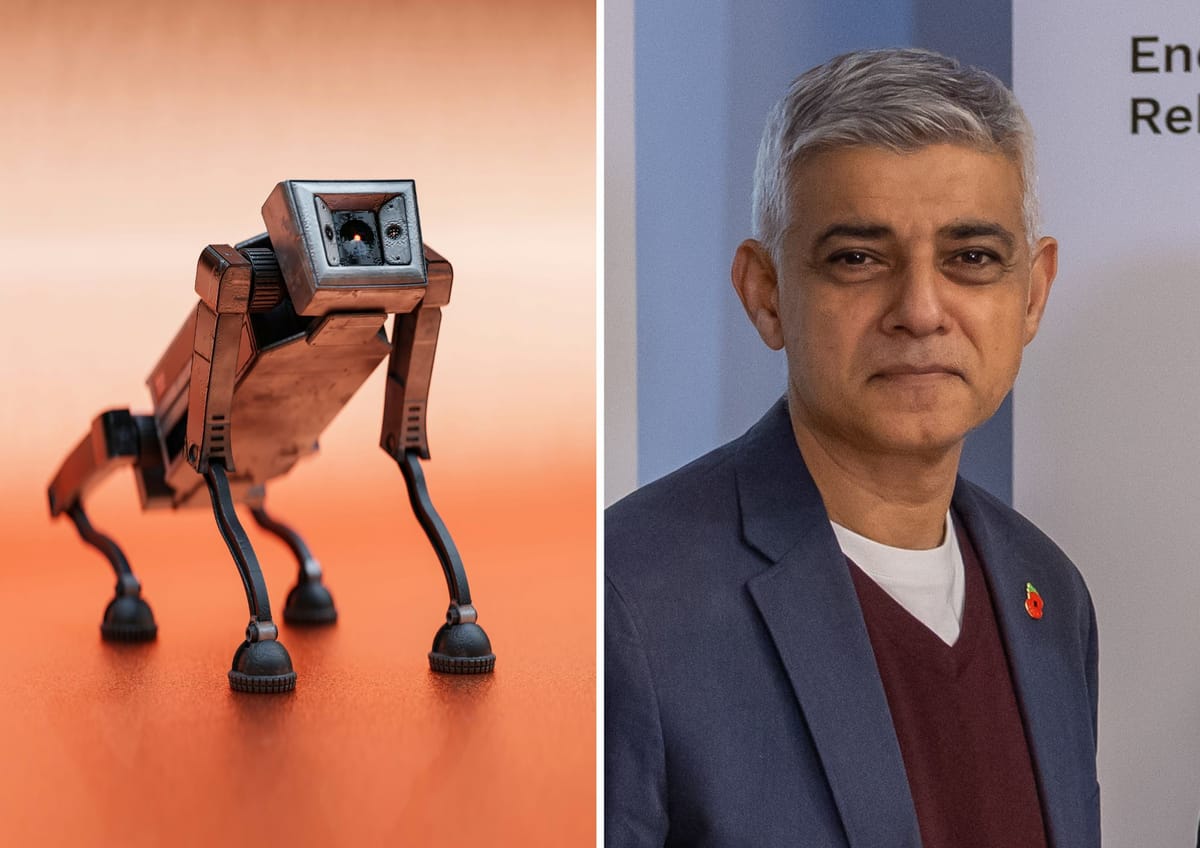
Mayor Sadiq Khan is quietly overseeing a programme that could bring robot police dogs to dangerous crime scenes in the UK capital.
Official documents reveal that Khan's policing office has begun exploring the use of quadruped robots - four-legged machines typically designed to operate in environments that are too dangerous for humans.
Just before Christmas, the Mayor's Office for Policing and Crime issued a notice inviting suppliers to provide it with a single quadruped, which American and European cops already use for SWAT-style reconnaissance, bomb-squad operations, and sending cameras into dangerous buildings.
Interestingly, the Home Office - a government department which sets national policing policy in England and Wales - did not set out plans to roll out quadruped robo-police dogs in its recently published "new model for policing" plan, which focused on drones and facial recognition.
However, a police force testing the tech elsewhere in England has indicated the bots will enter operational service this year.
The Old Bill's robotic four-legged friend
In its Preliminary market engagement notice - an announcement issued during the very early stage of the buying process - the Mayor's Office for Policing and Crime called on suppliers to provide “one complete robotic quadruped system” with a "manipulator arm" capable of “manual and autonomous functionality".
Khan's officials want the robot to support radio communications, including the option to use third-party radio frequency systems, and to be fitted with a module to support a mesh network communication platform.
This requirement points to potential real-world deployments in complex environments where signals are weak or fail altogether, such as tower blocks or underground spaces.
READ MORE: AI-driven robot cars can be hacked and hijacked by street signs
The key detail is the requirement for a manipulator arm. This suggests the machine won’t just film, but physically interact with the scene - nudging doors, moving objects, or inspecting suspicious items without needing a human on the scene.
Although the Mayor's hushed announcement does not indicate that Met Police robotic dogs are about to become a common sight on the streets of London, it certainly suggests a future in which machines play an increasingly central role in fighting crime.
Robodogs join forces: Quadrupeds in the UK
Spot the Robot Dog, perhaps the world’s most famous quadruped, has already been used at UK nuclear sites, including Sellafield.
Firearms officers at Nottinghamshire Police have also tested a robot police dog over a 12-week period.
The remotely controlled robot is fitted with high-tech thermal imaging cameras, allowing it find and spy on people in the dark.
It can produce detailed three-dimensional scans of internal spaces, allowing officers to accurately map entry and exit routes in dangerous situations.
The model tested in Nottinghamshire can climb stairs and scramble over obstacles, enabling use at safe distances within buildings and on rougher terrain.
READ MORE: Amazon prepares for the "next wave" of its robotics revolution
Unlike the miniature drones officers currently use, the robot police dog can operate in complete silence.
During testing by the Firearms Training Team, the bot was inserted into training scenarios including armed sieges, hostage negotiations and building searches.
Superintendent Louise Clarke, of Nottinghamshire Police, said: “While still in its infancy, it is not hard to see how this technology can and will be used in the future to... gather vital intelligence about a volatile situation without putting lives at risk.
“In the unlikely event of an incident involving chemical or biological agents, for instance, we would have access to another form of reconnaissance to gather vital information about a dangerous situation."
Robots are unlikely to replace real dogs anytime soon because they lack the "speed, immediacy and heightened sense of smell needed to chase down suspects and detect hidden items like drugs, cash and firearms", the police force said.
Saying no to "creepy and alienating" police robots
In the past, there has been stiff public opposition to the unleashing of robot canines. The NYPD famously returned its quadruped crime-fighter - a machine dubbed Digidog - after a "fierce backlash", although it was later reintroduced into service.
When NYC Mayor Bill de Blasio pulled out of a $94,200 contract, a city spokesperson said the robo-police dogs were "creepy, alienating, and send the wrong message to New Yorkers.”
At the time of their initial deployment, Alexandra Ocasio-Cortez claimed that "robotic surveillance ground drones are being deployed for testing on low-income communities of color with under-resourced schools".
READ MORE: Working with robots is really depressing, economists confirm
Digidog was used during the response to a home invasion and "barricaded situation" before being retired amid fears of an impending "dystopian surveillance nightmare".
Announcing its reintroduction, New York City Mayor Eric Adams criticised "a few loud people" opposed to the introduction of crime-busting robots.
However, the rollout of AI is likely to have eased some opposition to bots on the beat.
Additionally, anyone who's afraid of dogs or has a cultural aversion to them would likely prefer to see a robot rather than a German Shepherd carrying out routine, low-level tasks.
We'll keep covering the story of the global deployment of crime-fighting robots, so please get in touch if you've got a story from anywhere in the world.