Will America’s humanoid robot crackdown help Chinese machines conquer Europe?
New FCC rules could reshape global robotics competition as Chinese manufacturers look for markets outside the United States.

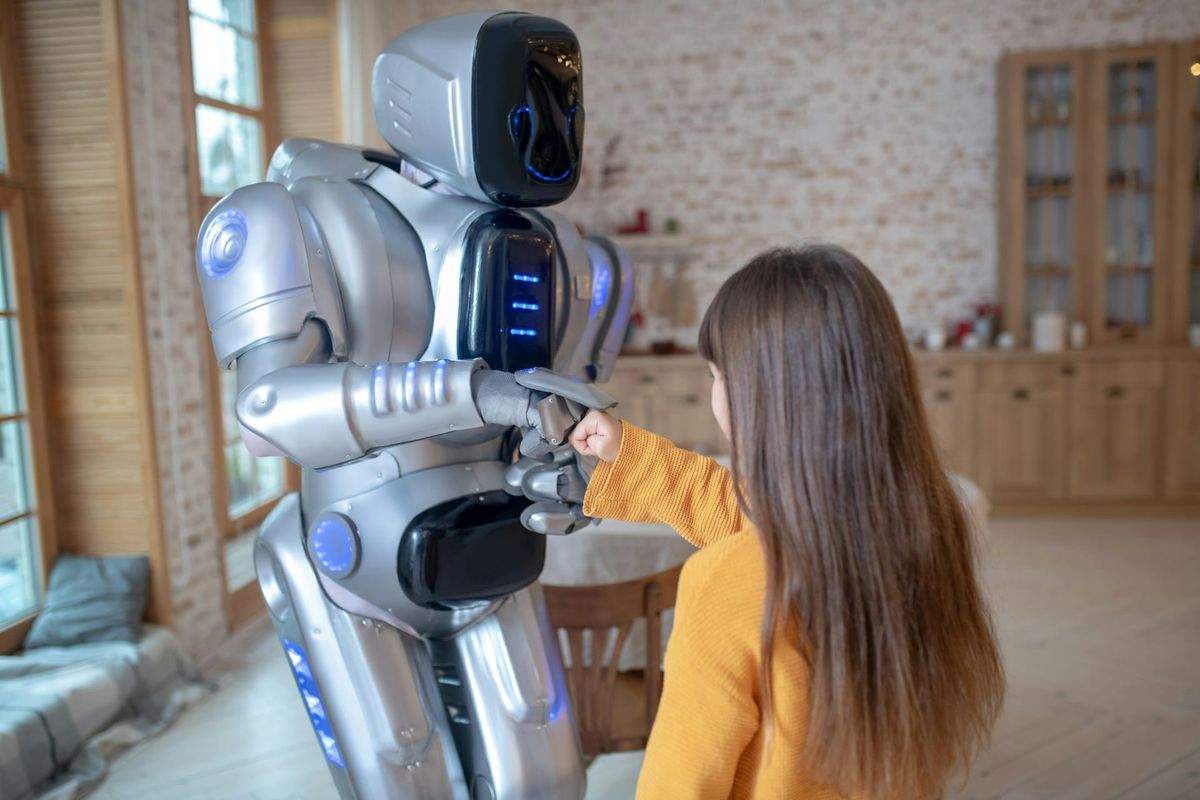
A US crackdown on foreign-made humanoid and other advanced mobile robots could inadvertently push Chinese manufacturers toward Europe and intensify competition with the continent's robotics industry.
That's the prediction from European warehouse automation giant Exotec, France's first industrial unicorn, after the Federal Communications Commission added foreign-produced advanced robotic devices to its Covered List - preventing new foreign-made humanoid, quadruped and other advanced mobile robots from receiving standard FCC authorization to enter the US market.
The FCC decision followed warnings from US government agencies that machines produced overseas potentially posed “unacceptable risks” to national security or the safety and security of Americans.
Exotec warned that the consequences could extend beyond America.
“The US measures could make Europe a relatively more attractive market for some non-US suppliers, especially Chinese manufacturers,” said Arthur Bellamy, chief revenue officer.
“However, it is too early to say that they will lead to a significant increase in Chinese competition in Europe. Market outcomes will also depend on cybersecurity, data governance, service capabilities, quality and total cost of ownership."
America's fight against foreign robots
The FCC’s new measures will not immediately disrupt the sale, operation or support of currently authorized European robotic systems in the United States - yet.
Bellamy added: "They primarily affect new foreign-produced mobile robots that require a new FCC authorization. Existing authorized systems can continue to operate under the current rules, and many European companies are monitoring developments closely.
“For European robotics suppliers, the impact will depend on the type of product, where it is manufactured and whether it already has the required US authorizations.
“European companies should not assume that their origin alone provides an exemption.”
China is already a robot superpower
The People's Republic already dominates the global market for industrial robots.
It installed 295,000 industrial robots in 2024, accounting for 54% of global deployments, according to the International Federation of Robotics.
More than two million industrial robots were operating in Chinese factories by the end of 2024, the largest stock of any country, while domestic manufacturers overtook foreign suppliers for the first time to capture 57% of their home market.
The Financial Times reported that China's robotics industry generated more than 300 billion yuan ($44 billion) in revenue in 2025, while exports grew 49%, making the country a net exporter of industrial robots for the first time.
Europe's dilemma
Europe has not introduced a blanket ban on foreign-made warehouse robots. Its approach is more targeted, combining safety and cybersecurity requirements with additional scrutiny in areas including critical infrastructure, public procurement and foreign investment.
But Brussels is already considering tougher measures designed to reduce Europe's dependence on foreign suppliers.
Draft “Buy European” procurement rules reported by Reuters could allow public authorities to exclude bids for major contracts containing less than 50% EU content and give preference to European companies in strategic sectors.
The proposals would also allow security risks arising from foreign ownership and obligations under foreign laws to be considered when awarding contracts.
READ MORE: AI-driven robot cars can be hacked and hijacked by street signs
Robot security fears
Exotec argued that European policymakers should consider not only the security implications of foreign robotics but also the potential economic consequences of competition from heavily supported overseas manufacturers.
“Europe should not focus only on security risks,” Bellamy said. “It should also address the risk of structurally distorted competition.
“State support, preferential financing and other structural advantages can allow foreign products to enter the market at prices that are difficult for European companies to match, putting European industrial capacity and value creation under pressure.
“What appears to be a saving at the point of purchase can become a much larger economic cost over time.”
Bellamy argued that this dynamic is already emerging in logistics and warehouse automation.
READ MORE: Mayor Sadiq Khan looks to unleash crime-fighting robot police dog in London
“The same issue is critical in logistics, where customers can purchase a complete automation solution from well-known European providers such as SSI Schäfer or TGW, even though their catalogs can include solutions developed or manufactured by Chinese companies,” he said.
“By presenting those solutions through a recognized European brand or integrator, they can be perceived by customers as European offerings, even when the underlying technology, manufacturing origin, ownership and value creation remain predominantly Chinese.”
Exotec wants European policymakers to introduce stronger mechanisms for determining where technology originates and how its manufacturers are financed.
“Where products cannot demonstrate adequate security, transparency or fair competitive conditions, targeted procurement safeguards or restrictions on market access should be available,” Bellamy said.