Yan LeCun hints at creepy Meta Ray-Ban AI plans as he celebrates $1billion raise
COMMENT: Facebook's former Chief AI Scientist now leads his own company, AMI. Can he resist the siren call of Mark Zuckerberg?

Yann LeCun, former Chief AI Scientist at Meta, said he "kind of hated" one key aspect of working at Mark Zuckerberg's social media empire.
But he clearly can't have disliked all of them, because he's now mooted a collaboration with his former employer that reminds us of the old days when Facebook was led by a man nicknamed "Big Zucker", rather than the chill cagefighting bro Zuck now feigns to be.
When he stepped down, LeCun said he didn't much like being a manager, but also criticised the "LLM-pilled" focus of the AI industry, indicating that large language models were a dead end on the path to achieving human-level intelligence.
His new company, Advanced Machine Intelligence, recently announced a $1billion raise to fund its development of world models - systems that understand cause, effect, space, time and physical dynamics to predict outcomes and plan actions rather than just generate text or images.
There is no doubt that this technology is extremely exciting and will play a major part in enabling a robotics revolution. It may even prove to be a major stepping stone on the path to AGI and superintelligence.
However, AIs that can learn about their environment in intimate detail and transmit information about what they find are clearly a potential privacy risk, particularly if they are embedded in wearable technology that becomes ubiquitous by fashion or force.
Through the smart glasses, darkly
With this very real concern in mind, we turn to a statement LeCun made in conversation with Reuters
He started by talking about his vision of AMI becoming "the main provider of intelligent systems" across a variety of industries, including manufacturing, aerospace and pharmaceuticals.
AMI's world model technology could also find cool-sounding consumer applications by giving robots the "common sense to really understand the physical world."
Then he told Reuters that AMI was talking with Meta about "potentially deploying" the tech inside its Ray-Ban smart glasses, which is "one of the shorter-term potential applications".
Ray-Ban's slogan is "never hide". Which, unfortunately, is a phrase with deep resonance to any consideration of a dystopian future in which ever-watching AI is embedded in our clothes.
READ MORE: Meta invents LLM system that lets dead people continue posting from beyond the grave
We do not yet know what LeCun and Meta will do together. But we can speculate about a future in which omnipresent AI watches our every move.
The UK Information Commissioner’s Office recently raised concerns after reports suggested that staff at a smart glasses manufacturer were able to access video clips showing wearers doing everything from having sex to using the toilet.
Now imagine those glasses were powered by AI models that not only understood what was being said by their wearers, but could interpret their movements and actions in the real world.
That's frightening to any privacy advocate because it's almost impossible to be free when you know every moment is being monitored.
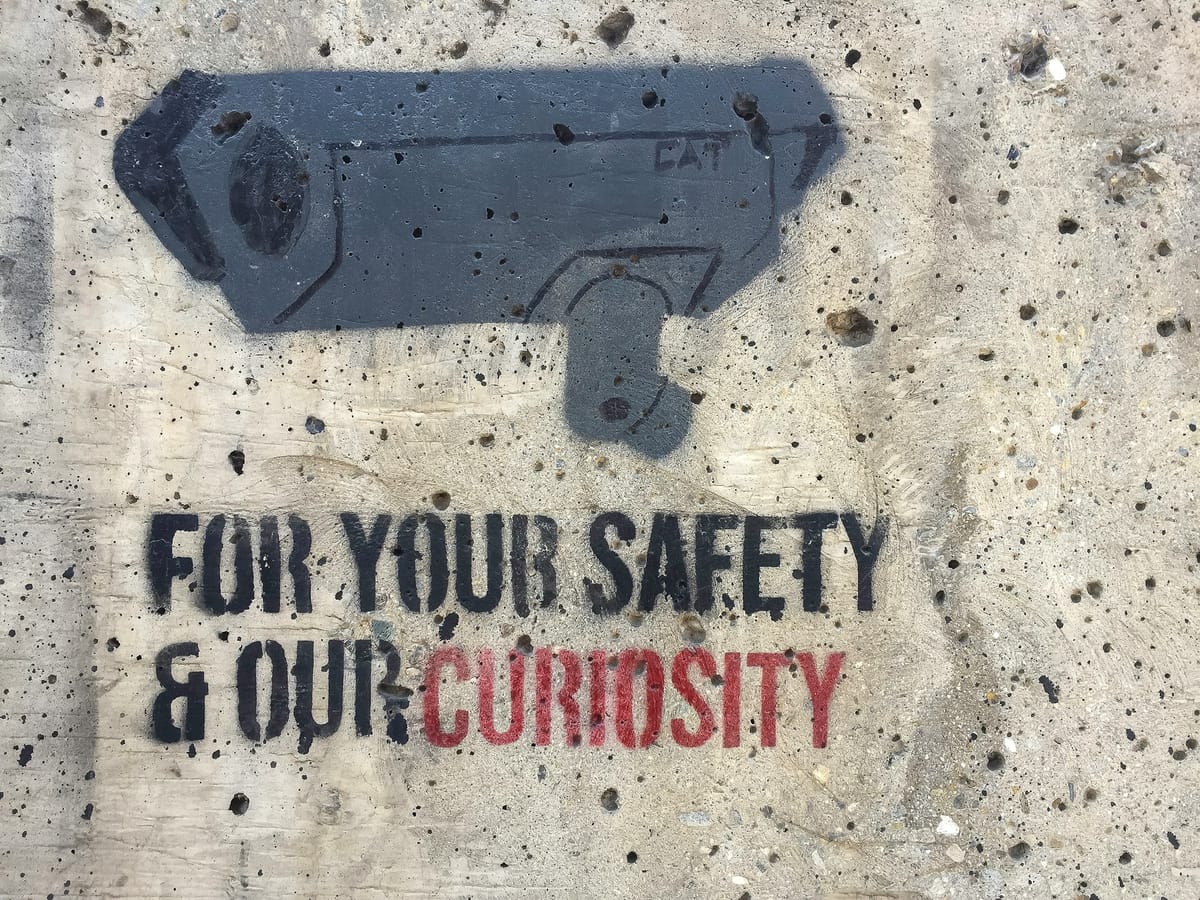
Once upon a time, it took legions of people to surveil a population. Omnipresent world models in wearables could make mass surveillance a very simple task.
The privacy risks of smart glasses
Thankfully, it is not entirely clear that the public actually wants to buy wearables fitted with cameras - let alone smartglasses imbued with intelligence.
Despite a public reception that was lukewarm at best and hostile at worst, tech companies keep on trying and failing to make smart glasses a success. Google famously failed to convince people to wear its Glass device - although it added the rather wonderful epithet "Glass-hole" to the lexicon.
Meta’s Ray-Ban smart glasses have achieved niche, modest sales rather than mainstream commercial success, with adoption far below typical consumer electronics breakouts.
They have also met with stiff opposition from privacy advocates.
The Electronic Frontier Foundation has warned that smart glasses could normalise covert recording and real-time AI surveillance in everyday life, raising concerns about bystanders being analysed or identified without consent.
READ MORE: Meta wants to automatically spy on "interesting moments" in your life, patent suggests
It also said that smart glasses could capture vast amounts of visual and audio data, potentially eroding social norms around privacy as wearable cameras become more discreet, affordable and culturally accepted.
Warning against putting facial recognition in wearables, it wrote: "Smartglasses don’t have to be used to decimate the privacy of anyone you encounter during the day. There are legitimate uses out there, but it’s up to those who use them to respect the social norms of the spaces they enter and the people they encounter."
Meet the Citizen Stasi - decentralised surveillance by everyone, of everyone
We've already gotten used to the idea of being filmed almost semi-constantly in every public space.
Smartphone cameras are commonly used as weapons by people wishing to police the public realm and punish behaviour they view as unacceptable - even though the impact of being shamed to an audience of millions online is often grotesquely disproportionate to the effect of actions that do not pass a criminal threshold.
In the hands of an authoritarian regime, smart glasses fitted with AI are clearly nightmarish.
But you don't need Big Brother for huge problems to occur. The Citizen Stasi - our name for people who film others without their permission - have pasteurised our public spaces by making it much more difficult to speak freely without fear of being recorded.
READ MORE: Meta is using AI to make NPCs more human, less robotic and hopefully not quite as ridiculous
The sort of person who uses their smartphone to shame today will be more than likely to program their wearable AI to root out wrongthink - then record and publish footage to the world.
And that's just one sinister use case out of many.
Smart glasses are already a privacy nightmare without AI. With world models, they could become one of the worst surveillance devices humans have ever conceived.
So, to Yan LeCun, we say: think carefully before deciding you once again love Big Zucker.