America's critical infrastructure is under threat from an ageless enemy within
Complexity, concentration and technological dependencies may prove to be just as fearsome enemies as external adversaries.

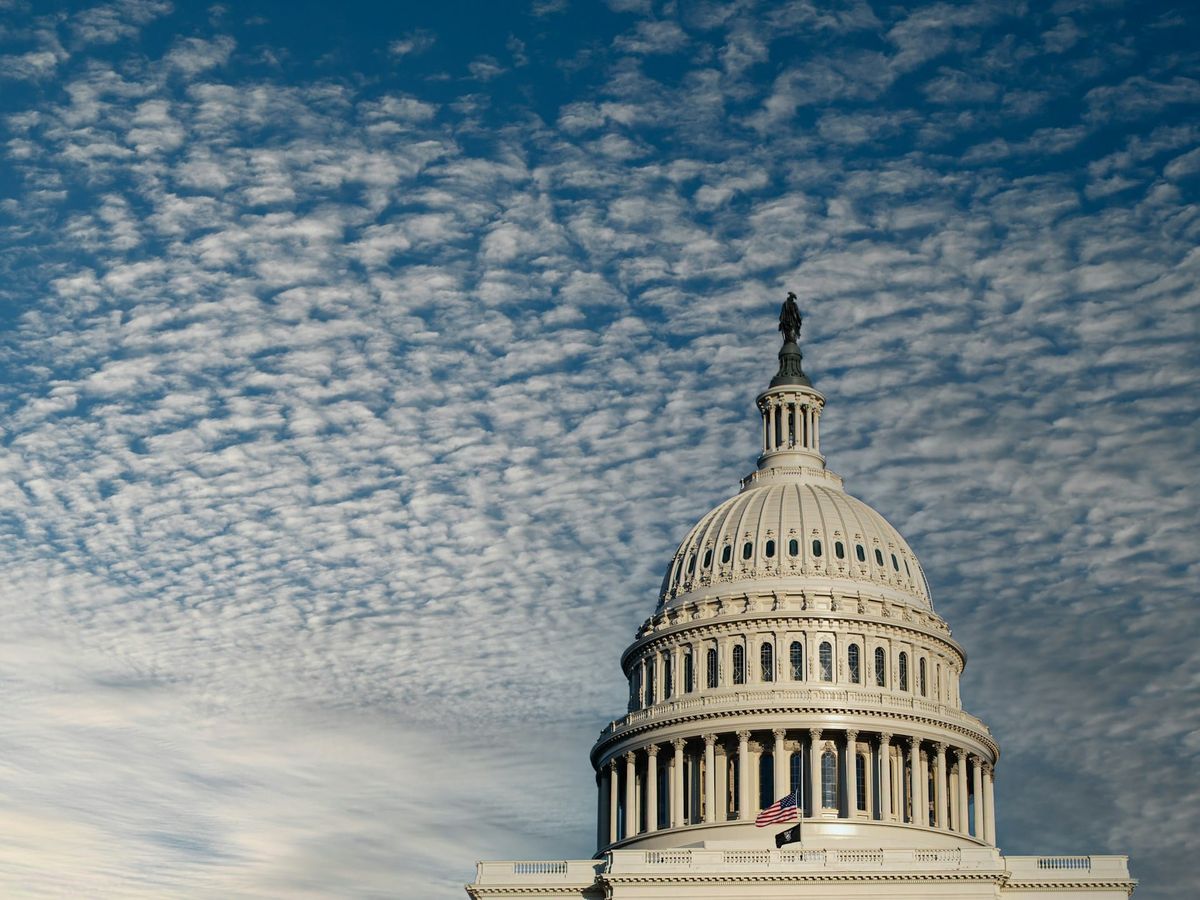
US intelligence officials have blamed a wave of outages that brought down critical systems across America on "maintenance and technical changes" rather than a coordinated cyberattack.
In congressional testimony published on November 23, Director of National Intelligence Jay Clayton addressed a series of "unrelated issues that have recently caused service disruptions."
“They are not a coordinated or state-sponsored attack,” he told lawmakers.
The revelation follows a period of extraordinary technological disruption in America, including a nationwide aviation ground stop, and coincides with the publication of several government investigations exposing vulnerabilities in the country's critical infrastructure.
Last week, federal auditors warned that America was failing to adequately protect its food and agriculture sector from cyber threats, while a congressional investigation called for the removal of Chinese-developed AI models from high-risk critical infrastructure functions.
Separate government investigations have exposed shortcomings in the management of federal data centers, the monitoring of connected devices, and the implementation of cybersecurity measures.
While America has good reason to fear the actions of hostile foreign powers, its critical infrastructure is also under threat from an enemy within: complexity and the risk of systemic failure it creates.
It doesn't take an enemy to bring down critical infrastructure. If you're an adversary intent on bringing down the systems that power Western civilization, there may be wisdom in patience.
Over a long enough timeframe, even the most well-defended and carefully maintained systems face a risk of failure that has nothing to do with external cybersecurity threats.
Systems that break themselves
On November 13, the Federal Aviation Administration (FAA) grounded planes across the US following a telecommunications failure in the nation's air traffic control infrastructure.
More than 18,000 flights were subsequently canceled, affecting more than one million passengers, Reuters reported on November 23.
The incident affected 17 of America's 22 regional air traffic control centers, according to a Congressional Research Service analysis.
The disruption occurred amid work to modernize the aging telecommunications infrastructure supporting American aviation.
This wasn't a surprise attack. In fact, the vulnerability of these systems was well-known.
In September 2024, the Government Accountability Office (GAO) revealed that more than three-quarters of America's 138 air traffic control systems were considered either unsustainable or potentially unsustainable.
A subsequent investigation, published in September 2026, raised concerns about the planning and scheduling of the FAA's modernization program.
Senators have now demanded answers about the root cause of the outage, which was accompanied by disruption to Microsoft's services and an outage involving the National Security Agency's internal communications infrastructure.
The vulnerability of America's food supply
Meanwhile, multiple US Department of Agriculture (USDA) computer systems were taken offline following a separate cybersecurity incident.
An internal email obtained by Nextgov revealed that IT staff were required to reset database passwords across all environments, triggering widespread application outages and disrupting financial services used by American farmers.
Seemant Sehgal, founder and CEO of BreachLock, suggested the incident exposed shortcomings in the department's understanding of its own systems.
“When one reset can take down farm loan and crop insurance payments, the dependencies between those systems were never mapped well enough to be changed safely,” he said.
The incident coincided with the publication of a GAO investigation on November 19, which revealed that federal agencies responsible for protecting America's food and agriculture sector had not fully implemented five of 16 legislative cybersecurity requirements.
READ MORE: Why critical infrastructure must be redesigned with disruption in mind
The sector encompasses approximately 1.9 million farms, more than 220,000 registered manufacturing, processing and storage facilities, and hundreds of thousands of restaurants.
The auditors warned that disruption to connected agricultural machinery could have consequences for the wider food supply chain.
Reported ransomware incidents affecting the sector rose from 167 in 2023 to 295 in 2025, with 227 recorded in the first seven months of 2026.
John Strand, owner of Black Hills Information Security, whose family includes farmers and ranchers in South Dakota, warned that agriculture is often overlooked in discussions about critical infrastructure.
“At the end of the day, one of the most critical functions of any country is its ability to feed its citizens,” he said.
“Agriculture is absolutely critical infrastructure, and we need to start treating it that way.”
The tragedy of security
Some of the most spectacular technology failures of recent years have been caused by work intended to maintain or protect systems.
In February 2024, a nationwide outage at AT&T prevented more than 92 million calls from being made, including more than 25,000 attempts to contact emergency services.
A Federal Communications Commission investigation traced the incident to a configuration error introduced during routine overnight maintenance intended to expand the network's capacity.
Just three minutes after the incorrectly configured component was introduced, the network's automated protection mechanisms triggered a nationwide outage.
It took at least 12 hours to fully restore services.
In July of the same year, a defective CrowdStrike security update affected an estimated 8.5 million Windows devices, according to Microsoft, disrupting aviation, healthcare and other critical services around the world.
In November 2025, a major outage at Cloudflare was traced to a defective configuration file associated with its bot management system, according to the company's postmortem.
The inevitability of failure
Taken together, these incidents point to a strange paradox at the heart of modern digital infrastructure: the technologies we use to make systems more resilient can also make them more complex, creating new opportunities for failure.
The link between complexity and systemic failure is well-known across disciplines.
In its 2026 outage analysis, the Uptime Institute found that data centers face risks arising from “increasing system complexity” and “growing co-dependencies” even though outages on a per-site basis had declined for five consecutive years.
"Despite — and because of — advances in design and operations, operators are grappling with increasing system complexity, grid instability, growing co-dependencies and evolving external threats," the institute warned.
In his 1984 book Normal Accidents, sociologist Charles Perrow famously argued that accidents were inevitable in certain complex, tightly coupled technological systems because of unpredictable interactions between their constituent parts.
READ MORE: Bank of England stress test exposes £249 billion catastrophic risk to the insurance market
Four years later, in The Collapse of Complex Societies, anthropologist Joseph Tainter argued that civilizations solve problems by becoming more complex, but that diminishing returns on investments in complexity can ultimately leave societies vulnerable to collapse.
Fixing one problem sometimes creates another, with unpredictable and potentially far worse systemic consequences.
In his 1998 paper How Complex Systems Fail, Richard I. Cook wrote: “Instead of increasing safety, post-accident remedies usually increase the coupling and complexity of the system.”
The great danger, then, is that our efforts to prevent one type of failure may inadvertently sow the seeds of another.
And, of course, we must never forget the systemic threat posed by the three horsemen of a digital apocalypse: complexity, interconnectedness and technological dependency.
Nation-state adversaries are bad news, obviously. But with friends like these inside our critical systems, who needs enemies?