Hybrid risks to critical systems: What recent attacks tell us about resilience
"Attackers don't have to bring down a system to cause serious harm. Undermining public confidence can be as damaging as the attack itself."

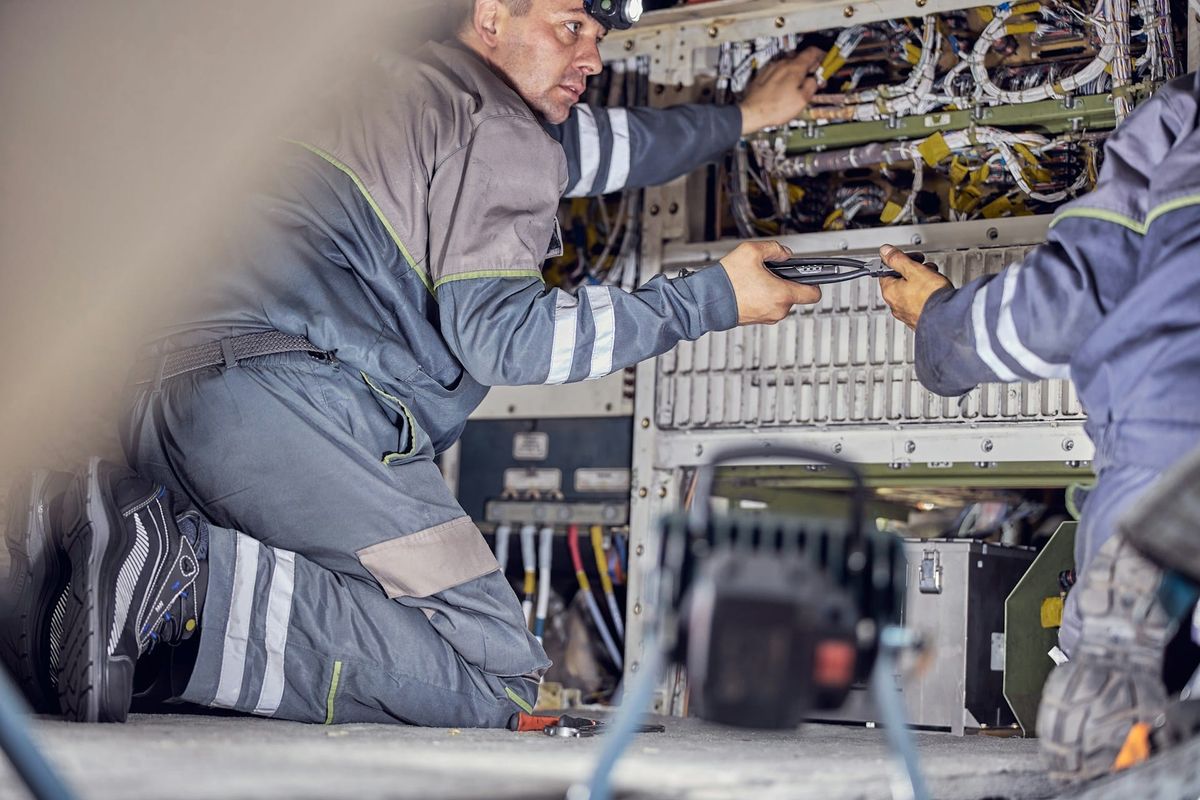
In October, attackers remotely interfered with refrigeration systems at around 700 retail sites across France, changing defrost settings and causing stock losses and damage. On 9 November, France formally attributed the attack to Shahid Kaveh, a cyber unit affiliated with Iran's Islamic Revolutionary Guard Corps.
Separately, on 1 November, Ukraine's Air Alert application was compromised and began sending false warnings about radiation hazards, chemical attacks and fighting in Kyiv. Russia also reported a cyber attack on its own emergency warning application.
These are very different incidents, but both highlight a risk that I think organisations responsible for essential services should take seriously. Attackers don't have to switch a system off to cause serious harm. They can make it do the wrong thing, or make people stop believing what it tells them.
We also shouldn't assume that every attacker is motivated by money. For hacktivists and hostile nation states, causing disruption or damage may be the objective. Undermining public confidence in the ability of governments and businesses to keep people safe can be just as damaging as the attack itself.
Through years of Red Team testing, I've seen how attackers look for opportunities across systems, suppliers and people, often exploiting weaknesses that sit between different areas of security.
Hybrid threats can combine cyber attacks, disinformation, physical interference and other methods to disrupt essential services, influence behaviour or undermine confidence. While we shouldn't automatically label these incidents as part of a wider hybrid campaign, they illustrate the kinds of risks organisations need to consider.
When cyber attacks affect the physical world
Operational technology (OT) doesn't always receive the same security attention as corporate IT. Yet organisations rely on it to control equipment, buildings and processes that are essential to their operations. The consequences of something going wrong depend on what the equipment supports. For a supermarket, temperature control is fundamental to the business. For a blood service, it's a matter of patient safety.
In early November, an attempt to interfere with refrigeration equipment used by French blood services was stopped before any blood products were damaged. Remote monitoring and third-party maintenance make operational systems easier to manage across multiple sites, but they also introduce external connections that attackers may attempt to exploit.
The precise route used in the French supermarket attacks has not been publicly established, so we shouldn't assume how the attackers gained access. For organisations operating similar equipment, however, the questions are important. Who can remotely change the settings on critical systems? How is that access controlled? And would anyone recognise an unauthorised change?
Detecting manipulation can be particularly difficult. A refrigeration system might remain online and respond normally while its operating parameters have been changed.
Monitoring that simply confirms equipment is connected may not identify that the physical process is operating outside safe limits. It's not enough to know a system is running. You need to know it's operating correctly.
One of the difficulties is recognising that something malicious is happening in the first place. An unexpected change in temperature might initially be treated as an equipment fault rather than a security incident. The people investigating it may be engineers or facilities staff who wouldn't ordinarily expect to be dealing with a cyber attack. This is why it's important to consider how these incidents would be identified and investigated, and whether operational and security teams would recognise when they needed to work together.
When a trusted warning becomes a threat
The emergency warning incidents highlight a different concern. In Ukraine, people rely on air raid alerts to decide when to seek shelter. On 1 November, false warnings were distributed through an application people were accustomed to trusting. Ukrainian authorities confirmed there was no radiation threat, and other warning channels remained available.
The concern isn't limited to people acting on false information. If warnings become unreliable, people may start questioning real alerts too. In a country where air raid warnings are part of everyday life, a loss of confidence could have serious consequences.
The fact that other warning channels remained available in Ukraine is important. It demonstrates why organisations shouldn't depend entirely on one system to communicate critical instructions, particularly during an emergency. There are parallels for businesses. Employees rely on emergency notifications, security alerts and instructions from senior leaders.
If an attacker compromised one of those channels, would people know how to establish which messages were genuine? Would the organisation have another reliable way to communicate? The authenticity of critical communications deserves as much attention as their availability.
How should organisations respond?
For organisations responsible for essential services, I'd focus on three areas:
- Understand what you depend on. Look beyond conventional IT systems to the operational equipment, suppliers, communications channels and people needed to keep services running. Identify where those dependencies connect and where a problem with one system or supplier could affect several sites or services.
- Consider what happens if a trusted system is manipulated. Most organisations have plans for systems going offline, but what if they continue operating incorrectly? Could someone change critical equipment settings without being detected? Could false instructions be distributed through an authorised communications channel? And would there be an independent way to establish what was happening?
- Test how people would respond. Bring cyber security, physical security, operations, communications and leadership teams together to work through realistic scenarios. Consider what would happen if equipment started behaving unexpectedly, information couldn't be trusted or a supplier's access was compromised. Would the right people recognise the problem, know who to involve and be able to keep essential services running?
Protecting critical infrastructure isn't only about preventing attackers from gaining access. Organisations also need to recognise when trusted systems are being manipulated, understand the potential consequences and know how to respond before disruption spreads. And where an attack undermines public confidence, restoring the service may only be part of the challenge.
Peter Connolly is founder of Toro Solutions