Critical UK subsea power cables suffer "multiple exposures", National Grid reveals
Underwater cables connect Britain’s electricity grid to the world, but also create points of fragility that need protection.

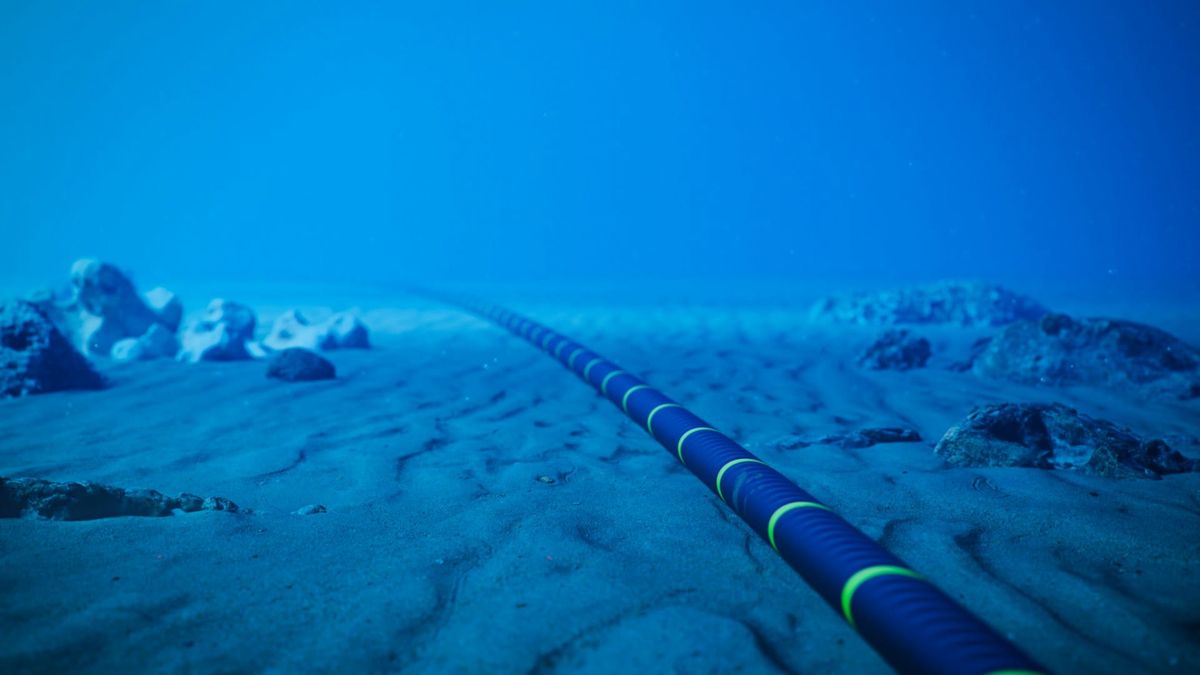
Underwater power cables connecting Britain to Europe and moving electricity around the UK have suffered “multiple known exposures,” requiring tens of millions of pounds of work to secure them.
National Grid has launched a bid to carry out "protection" work to this subsea critical infrastructure amid warnings that Britain lacks an “ambulance service” to fix damaged power interconnectors.
This shortage of specialist repair crews could mean “modern life will stop”, MPs were told this year.
To help prevent that nightmare scenario, a specialist contractor will be hired under a framework worth an estimated £66 million to protect and fix exposed sections of National Grid’s growing subsea cable network.
An exposure does not mean the electrical conductors themselves are bare or that a cable has failed. Nor does it imply a cybersecurity breach.
Subsea power cables are normally buried beneath the seabed or covered with protective material to shield them from hazards including ship anchors, fishing gear and seabed movement.
An exposure occurs when a cable has insufficient protective cover, potentially leaving it more vulnerable to damage.
National Grid’s new tender says several such exposures are already known and are likely to provide the first jobs under the contract.
Rather than commissioning a single £66m job, National Grid will appoint one specialist contractor, which it can order to carry out individual pieces of work as needed over an initial four years, with options to extend the arrangement to eight.
The £66m figure is therefore an estimate of the potential value of work available through the framework, not money National Grid has committed to spend.
But that estimate has changed markedly since National Grid first disclosed the plans.
A problem that's getting more expensive
A planning notice published in June valued the same procurement at £20m.
That earlier notice was much more specific about the immediate problem.
National Grid said the “key drivers” were existing exposures on two international electricity interconnectors: IFA, which connects Britain and France, and North Sea Link, which runs between Britain and Norway.
An electricity interconnector is a high-voltage cross-border power cable that allows countries to import and export electricity.
National Grid operates six linking Britain with France, the Netherlands, Belgium, Norway and Denmark, with a combined capacity of 7.8 gigawatts.
The June procurement said 2,000 metres of the IFA cable offshore from England, plus another 500 metres inside a Marine Conservation Zone, required protection.
Marine Conservation Zones are protected areas of sea designated for important habitats, species or geological features.
The affected IFA sections are in water as deep as 50 metres.
READ MORE: Ex-Lord Mayor “alarmed” over government's response to Atlantic undersea cable risks
National Grid also said an existing protective structure known as a rock berm over North Sea Link needed to be extended by eight metres at a water depth of 90 metres.
A rock berm is a physical shield made of stone, installed by specialist vessels that place a shaped mound of rock over a cable on the seabed. Depending on conditions, operators can also use rock-filled bags or heavy articulated concrete “mattresses”.
The September tender now puts the estimated framework value at £66m including VAT, £42m above the VAT-inclusive estimate published in June.
The procurement records do not explain why.
But the scope has clearly expanded.
Underwater resilience
The June notice concentrated on IFA and North Sea Link. The September tender makes the framework available across National Grid’s much wider portfolio of existing and planned subsea infrastructure.
That includes IFA and IFA2 to France, North Sea Link to Norway, Viking Link to Denmark, BritNed to the Netherlands, and Nemo Link to Belgium.
Some are operated through joint ventures, meaning National Grid shares ownership with another company or transmission operator.
The framework also includes LionLink, a planned connection between Britain and the Netherlands that will link into an offshore wind farm. National Grid has said LionLink could carry up to 2GW.
And the contract reaches beyond international links.
It includes the Eastern Green Link projects, Sea Link and Western Link projects, large domestic transmission schemes designed to move electricity between different parts of Britain, often using subsea cables.
Eastern Green Link 4 alone is planned to use more than 640km of cable to carry up to 2GW between Fife in Scotland and Norfolk in England. National Grid and SP Energy Networks awarded Prysmian a £2bn contract for its cables earlier this year.
In other words, the new framework could eventually cover protection and remediation across a large part of the undersea electricity network Britain is building around itself.
Deep sea dangers
Unfortunately for the humans who depend on power piped underwater, the seabed is not static.
Currents and waves can remove sediment from around buried infrastructure in a process known as scour. Sandbanks and other seabed features can migrate. Fishing equipment can disturb the seabed, while anchors can strike or drag across it.
Research published this year found that seabed movement, currents, anchor dragging and fishing can progressively reduce the depth at which subsea power cables are buried or expose them completely.
Separate 2026 research found that scour can create a “free span”, where sediment disappears beneath part of a cable, leaving it exposed and unsupported above the seabed. That can make it more vulnerable to fishing equipment and other external hazards.
READ MORE: UK builds experimental AI surveillance system using buried fibre-optic cables
None of that establishes what caused the exposures disclosed by National Grid. The company has not said they resulted from anchors, fishing, deliberate interference or any particular natural process.
Nor does exposure necessarily mean a cable is damaged.
The contractor National Grid chooses will be expected to do more than drop rock onto cables. The tender says it must also be able to remove or relocate debris and rebury insufficiently protected sections beneath the seabed.
That could include mass flow excavation, which uses large flows of water to move seabed sediment so cables can be lowered or reburied. National Grid also wants the ability to remove moving sand formations that can affect cable burial.
The fragility of modern life
The procurement comes amid growing government scrutiny of Britain’s ability not merely to protect undersea infrastructure, but to repair it quickly when something goes wrong.
Giving evidence to Parliament’s Energy Security and Net Zero Committee in June, Atlantic Council senior fellow Elisabeth Braw contrasted the systems available to repair telecommunications cables with those available for electricity interconnectors.
Telecommunications operators can subscribe to regional arrangements that provide access to repair vessels and crews.
However, for power interconnectors, Braw said there was “not the sort of ambulance service in place”.
She told MPs that interconnectors can take longer and cost much more to repair, with operators potentially having to find an available specialist vessel after an incident.
There is another bottleneck: people.
Braw told a separate parliamentary hearing in May that specialist workers who join damaged sections of subsea cable are in short supply.
"If we do not have enough repair crews, modern life will stop," she said.
Power cables differ substantially from the fibre-optic telecommunications cables that carry internet traffic.
They are heavy, highly engineered electrical systems carrying enormous amounts of energy. Repairing one can require specialist vessels, replacement cable, experienced jointing teams and work on the seabed before electricity can flow again.
Connecting the nation
The tender's significance also comes from what is happening to Britain’s power system.
The country is building more offshore wind and new high-capacity transmission routes to move electricity from where it is generated to where it is needed. Interconnectors are simultaneously tying Britain’s electricity system more closely to neighbouring countries.
As a result, increasingly large quantities of electricity depend on infrastructure most consumers will never see, lying beneath the North Sea, English Channel and surrounding waters.
National Grid’s latest procurement does not show that this infrastructure is failing.
It does show that parts of the existing network require intervention and that National Grid is preparing for a much larger programme of protection, reburial and other seabed work across existing and future cables.
What remains unanswered is how many exposures National Grid has identified, which cables are affected beyond the IFA and North Sea Link sections disclosed in June, what caused them, and why the estimated value of the procurement has risen from £24m to £66m in three months.
Those answers will show whether this is principally an expanded maintenance programme for a rapidly growing network, or whether National Grid has discovered a larger remediation problem than it first expected.
Machine has approached National Grid for comment. Please get in touch to comment on this story.