Vulnerabilities in refrigeration systems highlight the chilling fragility of food supply chains
Researchers warn that multiple flaws can "combine to create powerful attack chains against internet-accessible cyber-physical systems.”

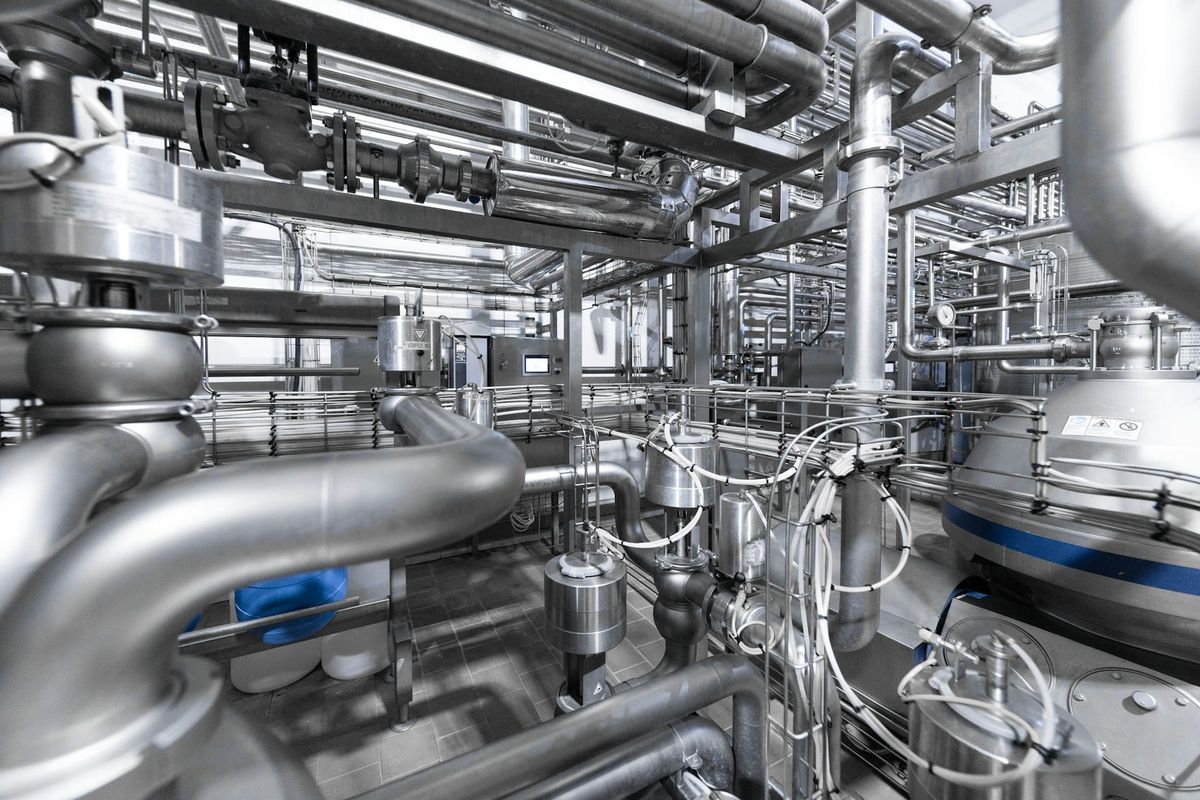
A trio of security vulnerabilities have been discovered in refrigeration controllers used in supermarkets, warehouses and cold-storage facilities, serving as a cold, sharp reminder of the digital dependencies underpinning the global food supply.
Researchers at Claroty's Team82 uncovered flaws in a series of refrigeration controllers built by a leading company in the space, including vulnerabilities that could enable authentication bypass, remote code execution, and denial-of-service attacks.
The researchers said a scan using Censys identified 2,765 exposed devices, suggesting that numerous management interfaces could be reached directly over the public internet.
There is no evidence presented by Team82 that the vulnerabilities have been exploited to disrupt food supplies. The fridge company - which we are not naming for overcautious legal reasons - addressed the flaws in updated firmware.
"Undocumented functionality, insecure command construction, and dynamically modifiable web server configurations can combine to create powerful attack chains against internet-accessible cyber-physical systems," Team82 warned.
Complexity and interconnections
The discovery highlights a much broader transformation that has taken place across industries.
Over several decades, equipment that was once monitored and controlled locally is now connected to computer networks. For example, industrial control systems gained remote management capabilities, web interfaces, and links to wider IT infrastructure, allowing operators to monitor and manage physical equipment from almost anywhere.
The benefits are not in doubt. Engineers can detect problems remotely, automate processes, collect data and manage geographically dispersed infrastructure much more efficiently.
But connecting physical machinery to digital networks also creates a new category of dependency.
Refrigeration equipment is a particularly interesting example because cooling is part of the largely invisible infrastructure that the modern food supply depends on.
Feeding the world
Modern food often travels through an extraordinary chain of temperature-controlled environments before reaching a plate.
Produce may be chilled shortly after harvest, stored in refrigerated warehouses, transported in refrigerated trucks or containers, pass through distribution centres and finally sit in supermarket refrigeration.
Break the cold chain for long enough and the product doesn't merely arrive late, but quickly becomes worthless, unsafe or even deadly.
The scale of that dependency is enormous.
READ MORE: Gunra ransomware gang is targeting critical infrastructure worldwide, CISA warns
According to the UN Environment Programme, inadequate cold-chain infrastructure contributes to the loss of 526 million tonnes of food, equivalent to 12% of global production in 2017. UNEP says that amount could feed around one billion people in "a world where 811 million people are hungry, and 3 billion cannot afford a healthy diet".
Those figures do not measure the consequences of cyberattacks. They demonstrate something more fundamental: modern food systems are profoundly dependent on refrigeration working reliably.
Increasingly, the systems controlling that refrigeration are digital - and therefore vulnerable to both internal and external threats.
Tragedy of the common connections
The systems involved in Team82's research provide centralised management of refrigeration equipment. Operators can use them to monitor refrigeration circuits, configure temperature thresholds, review alarms, change schedules and perform maintenance remotely.
That functionality is useful precisely because the controller is connected.
Team82 demonstrates the other side of that bargain.
Researchers discovered what they described as a hidden "code-of-the-day" authentication mechanism. After reverse-engineering it, they found that the mechanism could be used to bypass normal authentication.
They also uncovered a command-injection vulnerability that could lead to remote code execution and another issue that could cause a denial of service.
It would be wrong to leap from vulnerabilities in one family of refrigeration controllers to claims that hackers could shut down the global food supply.
The significance lies elsewhere.
Best before you get hacked
This investigation provides a small illustration of a much larger phenomenon: the physical infrastructure supporting modern supply chains is becoming ever-more dependent upon interconnected and highly complex digital systems.
The World Economic Forum's Global Cybersecurity Outlook 2026 highlighted this threat and warned that dependencies are often poorly mapped.
It wrote: “A breach or disruption of one supplier can cascade through the entire ecosystem, affecting production, operations and even other suppliers or customers.”
The report also specifically identifies the growth of connected technology as a source of additional exposure. It warns that increasing use of IoT devices and cloud services is expanding the attack surface, particularly when they are integrated into supply chains without adequate security controls.
Food has an additional vulnerability that many other supply chains do not: it spoils.
A shipment of components delayed by a cyber incident may eventually reach its destination. A refrigerated shipment held outside a safe temperature range for too long may have to be discarded.
READ MORE: How will 47-day certificate policies transform critical infrastructure management?
That makes the cold chain an unusually vivid example of the relationship between digital and physical resilience.
The systems that refrigerate warehouses and supermarkets, control factories, manage buildings and coordinate logistics have gradually become networked computers controlling physical processes.
That has made them more efficient and easier to manage.
It has also connected the physical machinery supporting modern civilisation to the same hostile digital environment as everything else. And that doesn't bode well for the future.